
Za'atar: Flirt With Your Food
Updated: Aug 7
This one's for everyone who's nodded along in a restaurant when someone said "za'atar" like they knew exactly what it was.
ZA'ATAR – pronounced zah-ah-tar, though we will not be checking your search history — is the herby, tangy, sesame-studded blend that makes simple food feel like it got asked out by someone interesting.
It doesn’t barge in.
It doesn’t shout.
It just leans on the counter, makes eye contact, and suddenly, your eggs are acting differently.

Za’atar is what happens when thyme, sumac, sesame, and salt get together and somehow become more charming than the sum of their parts.
It’s flirty, but useful. Confident, but not needy. The kind of blend that can turn warm pita and olive oil into a snack, a meal, or a personal philosophy depending on the day.
Here's the thing about za'atar: some people grew up with it. The rest of us discover it later and immediately feel cheated that we didn't know sooner.
We’re fixing that today.
Flavor Profile
Herby, tangy, nutty, and just savory enough to make you forget you were trying to eat "clean."
What’s actually in it.
Za’atar can mean both the herb itself and the spice blend, and the exact mix varies by region, family, and whoever is in charge of the jar.
The usual lineup:
Dried thyme, oregano, or marjoram
Sumac, for tang
Toasted sesame seeds, for nutty crunch
Salt

And then comes the move: stir it into olive oil and drop it right on warm bread right before serving. Yum!
That’s when Za’atar stops being a spice blend and starts behaving like a lifestyle choice.
Nothing in this blend is just along for the ride.
Why Za'atar Works
Why your body's into this one too.
Every ingredient in Za'atar happens to be quietly doing something useful, which feels almost unfair given how good it tastes.
Thyme: Contains thymol, a compound with antimicrobial properties, and has traditionally been used to support respiratory health — a fancy way of saying it's been clearing throats since before throat lozenges existed.
Sumac: Packed with antioxidants and known for its tangy vitamin C boost, sumac was pulling shift work in your body long before it showed up in your cottage cheese last week.
Sesame seeds: A solid source of healthy fats, calcium, and plant-based protein. Small seed, surprisingly stacked resume.
Olive oil: The reason “mediterranean diet" gets brought up at every dinner party. Heart-healthy fats and anti-inflammatory properties. Plus, it just makes things taste more expensive.
Basically: Za'atar isn't trying to be a supplement. It's just doing the job while tasting like something you'd actually want to eat.
Za’atar is low-effort charm. You don’t need a plan. You need bread, oil, and the willingness to become slightly annoying about it.
Flavor Hacks
Everyday ways to use Za'atar. Fair warning: you will start finding reasons to use this. None of the reasons need to be good.
Breakfast
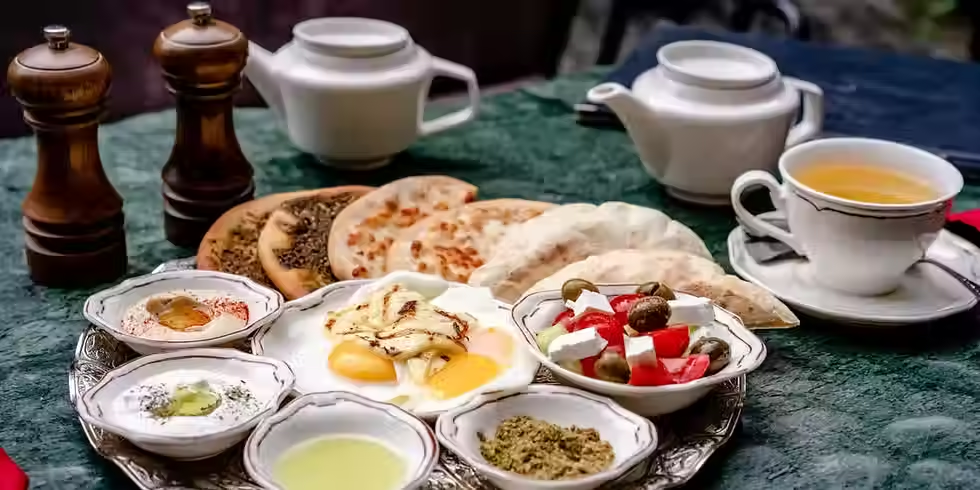
Mini Za'atar Manakish — the traditional breakfast move. Store-bought flatbread or naan, brushed with olive oil + Za'atar, broiled for 2 minutes. This is what za'atar was born to do.
Cottage cheese toast — toasted sourdough, cottage cheese, olive oil, Za'atar. The cottage cheese comeback tour continues.

Breakfast potatoes — pan-fried or roasted, tossed with Za'atar right at the end so it doesn't burn.
Fried eggs in olive oil — finished with Za'atar right out of the pan, yolk still runny.
Savory oatmeal — stir in olive oil, Za'atar, and a soft-boiled egg on top. Sounds wrong. Tastes like a decision you're proud of.
Lunch + Snacks
Salad topper – Dried Za’atar leaves + toasted sunflower seeds + raisins + sliced almonds + olive oil.
Hummus — a generous sprinkle plus a drizzle of olive oil. The bare-minimum-effort, maximum-payoff move.
Za'atar butter on toast (I love toast!) — soften butter, mix in Za’atar, spread thick. Simple, but it’ll make people ask what you did differently.
Roasted nuts — toss almonds or cashews with olive oil and Za'atar, roast until fragrant. Snacking, but with a personality.
Deviled eggs — a sprinkle of Za'atar on top instead of paprika. Same energy, better flavor, nobody will know why yours are better.
Dinner + Sides
Add to your favorite biscuit dough before baking. Yes, really.
Roasted vegetables — cauliflower, carrots, or potatoes tossed in olive oil and Za'atar before roasting.
Grilled chicken or lamb — rub it on before cooking, or finish with it after. Either way, it wins.
Lentil or vegetable soup — a sprinkle right before serving, plus a drizzle of olive oil. Turns 'fine soup' into 'this needs a candle and some jazz.'
Shrimp — tossed in olive oil and za'atar, seared hot and fast. Ready in under 10 minutes. Nobody needs to know that.
Desserts
Honey + Za’atar over Greek yogurt — Greek yogurt, honey, Za’atar, pistachios, maybe figs or dates. This is the easiest dessert to make.
Vanilla ice cream + olive oil + Za’atar — A small pinch of Za’atar over vanilla ice cream with a drizzle of good olive oil. Sounds illegal. Works shockingly well. Very… “tiny restaurant with one candle and no parking.”

Drinks
Za’atar salted rim — Use it on the rim of a Bloody Mary, michelada-style mocktail, margarita, or savory lemonade. Mix Za’atar with flaky salt first.
Za’atar Lemonade — Lemonade with a pinch of Za’atar salt on top or on the rim. The sumac in Za’atar plays nicely with lemon.
Cucumber-mint Za’atar Spritz — Sparkling water + cucumber + mint + lemon + a tiny Za’atar-salt rim. Very spa day, but with better snacks.
Storage Tip: Za'atar loses its punch faster than most spices because of the sesame seeds and dried herbs — store in an airtight container away from light and use within a month or two for best flavor.
Little Effort. Lots to Give.
Za'atar and olive oil on warm pita, folded in half, eaten standing at the counter still in my work clothes, making zero effort to sit down like a normal person.
It's not a recipe. It's barely a snack. It's just bread, oil, and a spice blend doing all the work, and it's outperforming meals I actually planned.

What's Trending With Za'atar
Za’atar is showing up everywhere right now — on restaurant menus, food blogs, cooking shows, and fusion recipes — which is both exciting and slightly funny because Middle Eastern kitchens have been saying, “Yes, welcome, we’ve been here,” for generations.
It’s also showing up in fusion dishes —Za’atar fries, Za’atar biscuits, Za’atar fish and chips, and savory pastries. Which sounds chaotic until you remember the blend is basically herbs, tang, sesame, and salt — a.k.a. four things food generally enjoys.
Source Note: The Institute of Culinary Education says social media and the visibility of Arab and Middle Eastern chefs have helped bring Za’atar into wider U.S. restaurant menus, cooking shows, and fusion recipes.
Bon Appétit and Epicurious also have active Za’atar recipe collections, including bowls, stuffing, and other menu ideas.

Recipe-ish
Not a recipe. More like a nudge in a specific, delicious direction.
A snack that thinks it's a personality trait.
Fair warning: You'll eat immediately and pretend you'll save some for later. We won’t tell.
More not-recipe recipes here:
Find all recipes we’ve ever mention
Kitchen Island Ramblings
Za'atar might be the only spice blend that convinces people bread and oil count as a full food group. I stand by this.
There is something deeply satisfying about a food that doesn’t ask you to perform. No chopping seventeen things. No sauce with a “resting period.” No recipe that begins with “the night before.”
Just warm bread. Olive oil. Za’atar.
Dip. Swipe. Repeat.
It’s the kind of food that makes an ordinary meal feel suspiciously impressive.
That’s the magic of flirting with your food – in this case, it’s a good flavor move with better timing.
It doesn’t need to change your whole life.
It just needs to make one bite better.
Za’atar does that.
Want a good jar to start with?
New York Shuk Za’atar — if you want something easy to find. Available online (Target, Amazon), approachable, pretty packaging, and a good “first jar'“ for people who don’t want to go on a spice pilgrimage.
World Spice Syrian Za’atar — if you want a Seattle-friendly option. Some love from my hometown, this is a Syrian-style blend with sesame, sumac, cumin, and coriander
The Mediterranean Dish Za’atar Spice Blend — if you’re already halfway down the “warm pita and olive oil” rabbit hole. It’s well reviewed and perfect for those who want a reliable option.
Tiny Tip:
Look for Za’atar with sumac, sesame, thyme/oregano/marjoram, and salt. If the jar smells flat, dusty, or like it has been waiting for a committee decision, keep walking.

Quick Q&A
Q: Isn't Za'atar just fancy Italian seasoning?
A: Hard no. Italian seasoning is basil, oregano, rosemary — an herb garden situation.
Za'atar's got sumac and sesame in the mix, which gives it crunch and a tang. Italian seasoning has never even attempted that level of social confidence.

Q: How much is “too much” Za'atar?
A: There isn't really a ceiling here. It's not a spicy spice — it's not going to punish you for enthusiasm. Start with a teaspoon, and if that feels timid, go bigger next time.
Want more?
Jump to the next episode now: Coriander — the Double-Agent Spice.
Check out our spice guide — the no-fuss Guide for people who want flavor without the homework.


Comments